
Sudden Exhaustion Before Labor (A Strange Sign Baby is Almost Here)
This post may contain affiliate links that I may receive a commission from if you click & buy. In addition, the information on this site is NOT intended to be medical advice. See my full policy for more information.

If you’re experiencing a surge of sudden exhaustion before labor and you’re at the end of your pregnancy, that could be a sign labor is very near. You see, it’s not uncommon for expecting mothers to experience extreme fatigue before labor. Learn all about this strange sign of labor and what it might mean for you!
This post may contain affiliate links from which I receive a commission if you click or make a purchase. This article is for informational and educational purposes only and is not intended to replace medical advice, diagnosis, or treatment. See my full policy for more information.
Sudden Exhaustion Before Labor: What It Means and How to Prepare
Sudden exhaustion right before labor is a common experience for many pregnant women, and there are several physiological reasons behind this phenomenon. As the body prepares for the intense physical demands of childbirth, hormonal changes play a crucial role.
In the final weeks of pregnancy, levels of progesterone and estrogen increase significantly. These hormones are essential for maintaining pregnancy, but they also contribute to feelings of fatigue by affecting the body’s energy regulation and sleep patterns. The hormone relaxin, which helps to loosen the ligaments in preparation for labor, can also lead to discomfort and disrupted sleep, further contributing to a sense of overwhelming tiredness.
Additionally, the body’s natural instinct to conserve energy for labor can manifest as a sudden need for rest. As labor approaches, your body begins to direct energy toward the process of childbirth, which can result in a decrease in energy available, so don’t be hard on yourself when you’re feeling much less energized to clean the house or chase after your toddler. This conservation of energy is crucial for ensuring that your body is well-prepared for the physical exertion of labor because it can be flat out exhausting!
Is It Normal To Feel Tired Before Labor?
A study published in the journal Obstetrics & Gynecology found that women who reported higher levels of fatigue in the days leading up to labor were more likely to have shorter, more efficient labors, suggesting that this pre-labor exhaustion may be a natural and beneficial part of the birthing process.
Moreover, the combination of physical discomfort and the body’s increased blood volume during the third trimester also plays a role in this exhaustion. Your heart is working harder to pump the increased blood supply, which can lead to feelings of fatigue. This combination of factors creates a perfect storm for sudden exhaustion right before labor, signaling that the body is gearing up for the big day.
My Experience with Sudden Exhaustion Before Labor
One of the most obvious signs I recall before going into labor with my second child was an overwhelming wave of exhaustion that seemed to come out of nowhere. It was as if my body had suddenly sloowed down, and no matter how much I tried, I simply couldn’t keep my eyes open.
It was such a stark contrast to how I had been feeling just days before, and I couldn’t believe how quickly this intense fatigue took over. I remembered hearing a brief mention of this in the childbirth class I attended, but at the time, I didn’t think much of it.
However, when I started to feel that extreme tiredness and it didn’t let up, I decided to look it up online through different forums and pregnancy websites. Sure enough, I discovered that sudden exhaustion is actually a good indication that our body is preparing for the intense work of labor. It was comforting to know that this sudden change in energy was not only normal, but a sign that my body was gearing up for the big day.
By the way, if you haven’t taken a birth class yet—girl, what are you thinking?! Don’t spend another second expecting to wing this birth. Click here to reserve your spot in this highly-rated online childbirth class today!
What To Do If You Experience Sudden Exhaustion Before Labor Starts?
If you’re getting close to your due date and you’re feeling tired before labor, now is a good idea to start getting more rest. Getting more rest can help your body begin the process of labor as it will be well-rested and relaxed in comparison to stressed and tired.
You will also want to make sure you have your hospital bag packed and ready (both for you and your partner).
If you haven’t made yourself a postpartum recovery kit, this would also be the best time to finalize any items you may need to help you recover from birth.
Want to know EXACTLY what tasks you should be checking off your 3rd-trimester to-do list? Grab my FREE Baby Preparation Guide now!
How Can Mom Tell if it’s Just a False Alarm?
During those last weeks of pregnancy, it’s easy to think that every little thing is early signs of labor. The most important way to tell if you are in labor and it’s not just a false alarm is by the timing and pattern of your contractions.
Let’s cover a few basics to make sure understand it clearly.
What Are Labor Contractions?
Contractions are your body’s way of drawing the baby down into the birth canal and out of your body. They feel like your abdominal muscles are all squeezing together (contracting) and then relaxing.
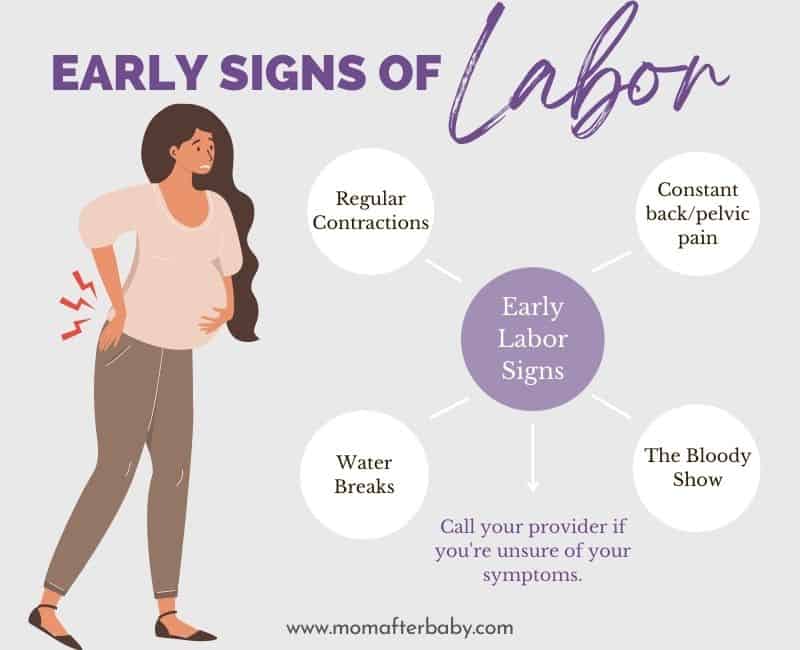
Real contractions (unlike braxton hicks contractions) are the ones that happen when you’re in true labor. They should last around 30 to 70 seconds and happen every 5 to 10 minutes or less. As your labor progresses, they will get stronger and become harder to relax through.
Sometimes, mom may feel lower back pain, and/or her water breaking along with these contractions.
How to Prepare for Sudden Exhaustion in The Third Trimester?
While it can be challenging to deal with this unexpected drop in energy, there are several ways you can prepare for it, ensuring that you’re not caught off guard when it happens. The key is to start prioritizing rest well before you reach those final weeks.
Make it a point to listen to your body—when you feel the need to rest, take the time to do so. Trust me, as a mom who tends to want to “keep going”, this is not the time to push through fatigue, as your body needs to be as well-rested as possible for the upcoming labor and delivery.
In addition to getting adequate rest, it’s also important to have a plan in place to manage the practical aspects of preparing for your baby’s arrival. This includes packing your hospital bag well in advance and setting up a postpartum recovery kit so you’re not scrambling to get things together when your energy levels dip.
You might also want to finalize any outstanding tasks on your third-trimester checklist to reduce stress in those final weeks.
Have your support system of family and friends on standby, who can help with daily tasks or take over when you need to rest. By planning ahead and being proactive, you can better manage the sudden exhaustion that often comes before labor and ensure you’re ready for the big day, meeting your baby.
More Tips to Prepare for Sudden Exhaustion in the Final Trimester:
- Prioritize Sleep: Take naps during the day and ensure you get a full night’s rest.
- Pack Your Hospital Bag Early: Have it ready to go by 32-35 weeks, including essentials for you, your baby, and your partner.
- Set Up a Postpartum Recovery Kit: Include items like comfortable clothing, pads, nipple cream, and pain relief.
- Delegate Tasks: Lean on your support system for help with household chores, meal prep, and last-minute baby preparations.
- Finalize Your Birth Plan: Review it with your healthcare provider or midwife to ensure everyone is on the same page.
- Listen to Your Body: Don’t ignore signs of fatigue—rest whenever you need to.
- Stay Hydrated and Nourished: Eat small, frequent meals to maintain your energy levels.
What If You Experience a Burst of Energy Before Labor?
Want to hear some good news? Not all moms will experience intense feelings of exhaustion or sleepiness. Some moms will, in fact, experience a sudden burst of energy instead!
Have you ever heard of “nesting” listed as one of the common signs of labor? Now you know where it comes from. When moms experience that surge of energy, they usually end up cleaning like a maniac, nesting baby’s room, doing endless amounts of laundry — you get the point.
What I always suggest moms do if they do end up feeling energized and get that nesting instinct, is to finalize any last-minute baby preparation tasks, but do NOT overdo it.
It’s important to still make sleep and rest a priority while pregnant, especially before labor.
Are There Other Weird Things That Happen Before Labor?
Now that we talked a lot about energy levels and exhaustion being a sign of labour — are there any other kind of weird signs of labor moms could expect in her final weeks of pregnancy? You bet there is!
Feeling Sick and Tired Before Labour
Though it’s much less common, some women may experience feeling sick as a sign of early labor. These symptoms can include the following:
- Diarrhea
- Vomiting
- Fatigue
- Cramps (similar to menstrual cramps)
- Body Aches
If you end up experiencing these symptoms before your baby’s arrival, keep track of them and make sure to notify your healthcare provider if any concerns arise.
Emotional Signs Labor is Approaching
Physical changes and symptoms aren’t the only early labour signs. Some mothers experience strong emotional shifts and mood swings (sometimes correlated with a lack of sleep).
If you find yourself struggling with perinatal or postpartum depression (much more serious than the baby blues), you should seek out help immediately. These specific symptoms don’t usually indicate a sign of labor, but they do indicate a sign of stress that needs to be addressed.
I promise maternal mental health issues are not ones you need to figure out alone. There is help out there and resources out there to get you the support you deserve, click here for my favorite postpartum resource.
Losing Your Mucus Plug Before Labor
Do you know what the mucus plug is and what role it plays in your pregnancy?
The mucus plug is a clump of mucus that sits in a woman’s cervical canal to prevent bacteria from entering your uterus throughout pregnancy. Once women approach the end of their pregnancy or even the start of labor, they may experience a loss of the mucus plug.
Some women mistake their mucus plug for regular vaginal discharge (which is common during those final weeks of pregnancy).
To differentiate, the mucus plug tends to have a thick, gelatinous texture and has a creamy-yellowish color. Another fun fact is that a woman’s body can regenerate the mucus plug after it’s lost. Hence, it’s not always a crystal clear sign labor is starting (but it sure indicates it’s close).
Sudden Pelvic Pressure (or Pain) Before Labor
Lastly, this is probably the most downright weird and uncomfortable sign labor could begin — pelvic pressure or pain. You may have heard it referred to as “lightening” too.
Unfortunately, this process isn’t always a sign of early labor, but it is a sign of your body preparing for labor. You see, your baby dropping deeper into the pelvic canal is their way of preparing for a vaginal delivery (and can sometimes be a c-section).
Some mothers don’t feel their baby drop, but others do. I remember with both of my boys I was able to tell when they dropped. With my first pregnancy, I experienced horrible pelvic pain — due to the ligament being stretched out and feeling pushed to it’s max. I had to sleep in specific positions that took the weight off of my pelvic region or else I’d feel sharp pains.
With my 2nd pregnancy, I felt horrible lightning crotch, that when you experience a jolt of sharp pain down there. Almost as if your crotch was being stuck by lightening. It sounds horrible and it’s very uncomfortable, but it is manageable.
Sudden Exhaustion Before Labor: Final Thoughts
If you’re a first time mom preparing for the birth of your baby or a seasoned mother awaiting your baby’s arrival, sudden exhaustion before labor may hit you. Take the time to rest up and be sure you have your hospital bag packed and essentials ready for the big day.
Experiencing tiredness before labour is a good sign your body is getting ready to give birth. Whether it’s days or weeks, if you’re in your last month of pregnancy, do yourself one favor today and get a good night’s sleep tonight. You never know when your baby is going to make their debut into the outside world.
More articles you’ll find helpful and interesting: