Signs Baby is Ready to Crawl & How YOU can help them!
This post may contain affiliate links that I may receive a commission from if you click & buy. In addition, the information on this site is NOT intended to be medical advice. See my full policy for more information.
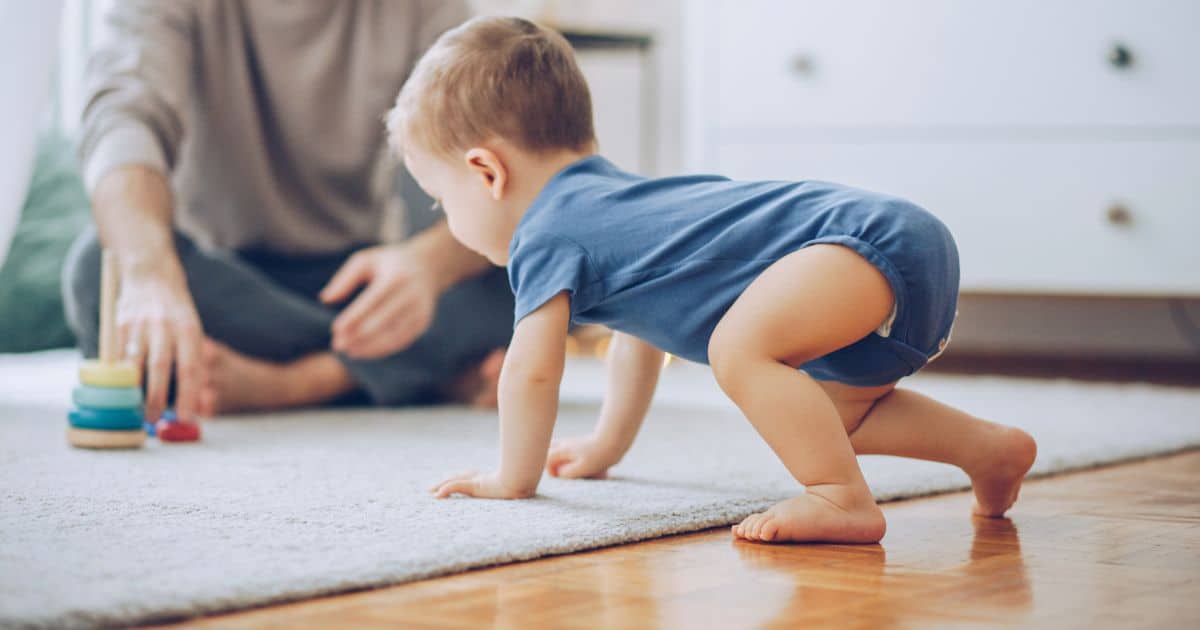
Your baby’s first year is filled with exciting milestones, and one of the most anticipated is crawling! I vividly remember when my son was on the verge of crawling—it was an exciting time as he worked through the different stages before officially becoming a crawling baby. But what are the signs baby is ready to crawl?
Let’s take a closer look at the key developmental milestones that often signal your little one is gearing up for that first crawl, and how you can help them along the way!
Before we dive in, I want to remind you of an important aspect of baby development. If you ever have concerns, set up an appointment and discuss them with your pediatrician.
On the contrary, if someone is making you feel bad your child hasn’t reached a milestone that you’re not worried about, keep an eye on it and keep the conversation open with your child’s pediatrician so you can be sure everyone is on the same page.
This post may contain affiliate links from which I receive a commission if you click or make a purchase. This article is for informational and educational purposes only and is not intended to replace medical advice, diagnosis, or treatment. See my full policy for more information.
Big Signs Baby is Ready to Crawl
When babies are about to hit a major milestone, like crawling, they usually show clear signs they’re getting ready.
Here are some of the common signs I noticed in my son, plus a few additional ones that may show your baby is preparing to master this important skill!
1. Baby Can Sit Up on Their Own
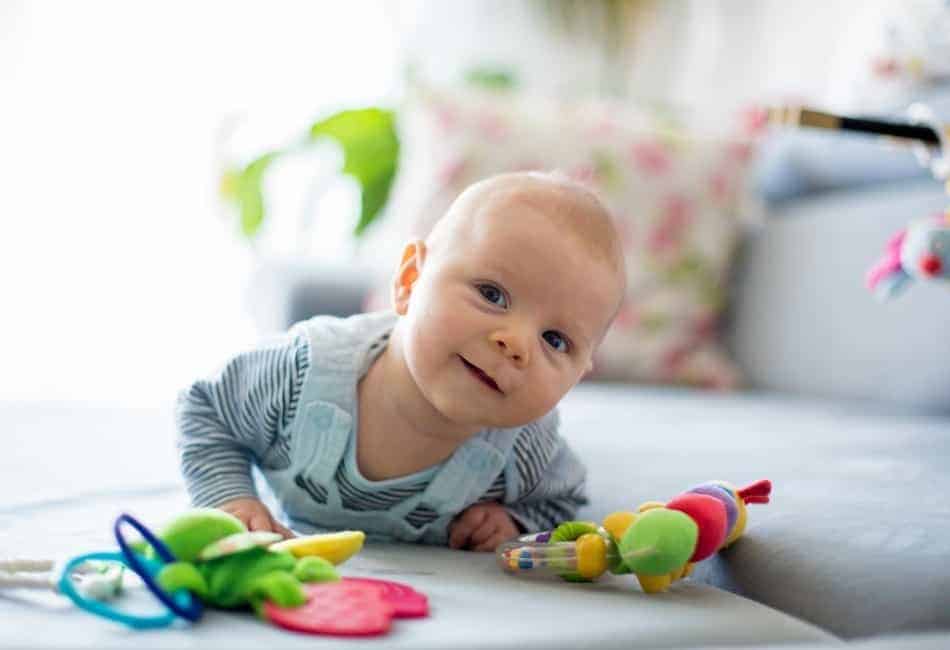
When my son turned 5 months old, he began sitting up on his own and became VERY eager to explore during tummy time. It was like a light switch went off when he finally understood he was capable of exploring on his own.
The problem? He couldn’t get from point A to point B!
When babies begin sitting up independently, it’s a sign they’ve developed the core muscles and balance needed for crawling. For my son, sitting up at around 5 months of age was the moment his curiosity for exploring really took off. He became much more engaged during tummy time, eager to reach out and test his motor skills.
Although he couldn’t move from point A to point B just yet, I could tell his body was preparing. This shift in muscle strength is essential because babies need strong upper and lower body muscles to support the crawling position.
2. Baby Can Hold Themselves on All Fours
Soon after sitting independently, my little guy discovered a new skill—getting into the classic crawl position! He started pushing himself onto all fours, rocking back and forth like he was about to launch himself forward.
If your baby starts rocking in this crawling position, it’s one of the clearest signs they’re getting ready to move.
To help encourage this movement, I gently supported his belly and guided him to shift his weight forward. With a little practice, he was crawling within a week!
From one mom to another, if you catch your baby doing this for the first time, capture it on camera, it’s a cute little developmental skill you’ll cherish forever.
3. Baby Begins to Cross Crawl
Cross crawling is another sign your baby is on their way to full-fledged crawling. This is when babies start coordinating their movements by reaching forward with one arm and the opposite leg. This action helps develop motor skills and hand-eye coordination, which are vital for crawling and beyond.
If your baby has started doing this, they’ll likely be crawling all over your house in no time. Be sure to baby-proof your home, especially areas like the coffee table, tall furniture, and sharp edges where your little one might explore.
The Different Stages of Crawling
Babies tend to explore different crawling styles as they work on mastering forward movement. These styles vary from one baby to another, and it’s all part of their unique development process.
Keep in mind, that some babies may skip a style altogether, so don’t get too caught up in comparisons or obsessing over them mastering every style of crawling. I promise, these little ones just like to surprise us with their skills.
So, here’s a closer look at the different types of crawling and how they contribute to your baby’s motor development:
- Classic Hands-and-Knees Crawl: This is the most commonly recognized form, where your baby moves forward on their hands and knees. In this style, your baby uses their opposite knees and arms to propel forward. This classic crawl is an important milestone that demonstrates your baby has developed core muscles, neck control, and the coordination needed to move their limbs in harmony.
- Army Crawl: This style involves babies dragging their bellies across the floor while using their arms to pull themselves forward. While it may seem like they’re not fully mobile, this type of crawl is great for developing upper body and arm strength, which is crucial for more advanced crawling stages. My 2nd little one loved to crawl around like this for quite a long time.
- Bear Crawl: In this style, babies will lift their hips up high and crawl on their hands and feet, rather than their knees. The bear crawl is an excellent way for babies to build muscle strength in their legs, preparing them for their first steps and walking.
- Crab Crawl: The crab crawl involves moving sideways or backward, much like a crab. This might look funny but is an important phase in developing your baby’s motor skills. It also shows their growing problem-solving abilities as they experiment with different ways to move around.
- Commando Crawling: Here, babies move while keeping their tummies on the ground, pushing forward with their elbows. Commando crawling works on strengthening their neck muscles, arms, and shoulders, helping babies get closer to the classic crawl.
The truth is, there’s no right or wrong way for a baby to crawl. Every baby finds their own unique way to achieve forward motion. What’s important is to ensure your baby has a safe place to explore these different methods, as this will encourage their physical strength and coordination.
When Do Babies Typically Start Crawling?
Most babies start crawling between 6-10 months of age, but remember, there’s a wide range of normal. Your baby might focus on other motor milestones like babbling or standing before crawling becomes their top priority. And if your baby doesn’t crawl exactly when you expect, that’s okay! Every baby develops at their own pace, and some may skip crawling altogether and move straight to walking.
The Impact of Crawling on Baby’s Sleep Patterns
While your baby is working hard on achieving their first crawling milestone, you might notice some changes in their sleep habits. Many parents find that as babies approach major developmental milestones, like crawling, their sleep can be disrupted. Hello, sleep regressions!
Why does this happen? Well, as babies develop new skills, their brains become more active, even during sleep. This increased brain activity can make it harder for them to fall asleep or stay asleep through the night. The good news? Baby sleep apps like Huckleberry can help!
During a sleep regression, you might notice more nighttime wakings, shorter naps, or a baby who just can’t seem to settle down at bedtime. Remember, this is a normal part of development, and their sleep patterns should return to normal once they’ve mastered their new skills.
Using a baby sleep app like Huckleberry is helpful because it’ll help you track patterns that can easily be linked to a developmental progression along with the ability to have the Huckleberry sleep experts share their insights to help you formulate a plan to keep babies sleep on track.
Remember, the best thing you can do during this time is to maintain a consistent sleep routine, provide comfort, and offer extra calories since all that physical activity burns energy. With time and patience, baby’s sleep habits will get back on track.

How to Help Your Baby Crawl: Fun Activities to Try
If your baby is in their crawling stage right now, there’s a few ways you can support their developmental process. Below, I’ve laid out 3 really effective activities to help build your little one’s skills (along with your bond) as they master the art of crawling!
1. Encourage Tummy Time (The Foundation of Crawling)
If you’re looking for ways to help your baby build the important skills needed for crawling, one of the best things you can do is give them plenty of tummy time. Tummy time is essential for strengthening a baby’s neck, back, and upper body muscles, all of which are required for reaching major milestones like crawling.
By engaging in tummy time as early as possible, even during the first few weeks after birth, you’re helping your baby develop foundational physical strength.
This activity supports the development of motor skills like rolling over, pushing up, and eventually, moving into a crawling position. Tummy time also helps with binocular vision and hand-eye coordination as babies start using their eyes to focus on nearby toys.
- Neck Control and Upper Body Strength: During tummy time, babies lift their heads to look around, which helps develop neck muscles. This leads to better neck control and prepares them for crawling. As they lift their heads and move their arms, they’re also building strength in their shoulders, arms, and chest—key areas for movement of their arms when crawling begins.
- Using Baby’s Favorite Toys: Incorporating baby’s favorite toys during tummy time makes it more engaging. You can place colorful, eye-catching toys just out of reach to encourage baby to push forward and reach for them. This activity helps develop hand-eye coordination and is a fun way to practice moving their arms and legs.
When we would practice tummy time with my boys, we’d use a fun colorful activity mat to draw their attention to the bright colors and shapes, making it more enticing.
Sometimes I’d use our boppy pillow to help prop him up. I’d do this for no more than 3-4 mins at a time 2-3 times a day or if he began crying, I’d just try again later.
Remember, tummy time should be done on a soft surface like a play mat or blanket to protect baby’s skin and prevent potential hazards like hard surfaces or sharp edges. It’s also important to monitor your baby closely during tummy time, especially if they’re still developing neck control.
2. Use a Play Tunnel
A play tunnel is a fun way to encourage babies to crawl forward. By placing a favorite toy at the other end, you give them the motivation to move through the tunnel. This activity also teaches them spatial awareness and coordination as they work to make their way to the toy.
You can use a simple play tunnel just like this one and let the crawling fun begin!
3. Help Baby Do a Push-Up
When babies start pushing themselves up on their arms, they are getting closer to the classic crawl. You can gently support their chest with two fingers while they try to push up. This small boost helps strengthen their upper body muscles and prepares them for the next step of getting onto all fours.
Positive Reinforcement: Encouraging your baby with smiles, claps, or verbal praise when they show effort in crawling is another great way to support their learning process. Babies thrive on your engagement and you’ll find the more you jump in there and get silly, the more they’ll reciprocate it back!
Create a Safe Environment: As your baby becomes more mobile, it’s important to baby-proof your home (I know, I know, I said it already, but safety is a big one to stay on top of) Be sure to cover any sharp edges, secure furniture, and keep small objects or other potential hazards out of reach.
What If My Baby Isn’t Crawling Yet?
The grueling question I know every mom has swarming around her mind, “what if my baby isn’t crawling yet?”.
If your baby is taking more time to crawl or isn’t showing the typical signs baby is ready to crawl, take a deep breathe and remember there’s no linear journey to these milestones.
However, if your baby hasn’t shown much progress and you are concerned, it’s always a good idea to check in with your healthcare provider. They can help determine if your baby needs more help to support their motor development.
Final Thoughts on Helping Your Baby Master Crawling
Watching your baby learn to crawl is such a rewarding experience. Whether they’re mastering the belly crawl, commando crawling, or jumping right into first steps, it’s important to celebrate each milestone.
And remember, every baby moves at their own pace, so give your little one lots of encouragement and time to practice their new skill!
More articles you’ll find helpful or interesting:
My daughter pretty much skipped the crawling stage! Lol. She did this scoot to get herself around instead.
Aww they always just take things at their own pace and it always works out, sounds so adorable!
My daughter showed all the signs of being ready, but didn’t start crawling long after. Now she zips around like a little speedster on all 4s. She’s been standing for a long time now but hasn’t tried to walk. She just loves to take her time haha
aw lol yeah sometimes our kiddos take their time with each milestone, but that’s ok 🙂