Best Remedies to Get Rid of Cradle Cap
This post may contain affiliate links that I may receive a commission from if you click & buy. In addition, the information on this site is NOT intended to be medical advice. See my full policy for more information.

As a parent, there’s nothing quite like the experience of soaking up those moments with your newborn baby. Yet, with each new stage, you might encounter a few surprises—like the appearance of those yellowish, flaky patches on your baby’s scalp known as cradle cap. And while my first baby never experienced this, my second little one started developing early signs. However, with a quick call to our pediatrician and a few home remedy steps to follow, we were able to get rid of the cradle cap on our baby’s head before it spread more.
Now, as a mom, I know it can feel a little unsettling to see your little one’s delicate skin full of those thick crusts or waxy scales on their head. But don’t worry; you’re not alone in this journey.
Cradle cap is much more common than you think. Plus, knowing there are gentle and effective ways to get rid of your baby’s cradle cap can help you be at ease. Had I known these before my little guy developed his cradle cap, I would have also been at much more ease.
In this article, we’ll explore what cradle cap is, share some of the best remedies to help you address it, and offer tips on how to prevent it from coming back. By the end, you’ll feel much less stressed and more confident in getting rid of cradle cap if your baby has it.
This post may contain affiliate links from which I receive a commission if you click or make a purchase. This article is for informational and educational purposes only and is not intended to replace medical advice, diagnosis, or treatment. See my full policy for more information.
What is Cradle Cap?
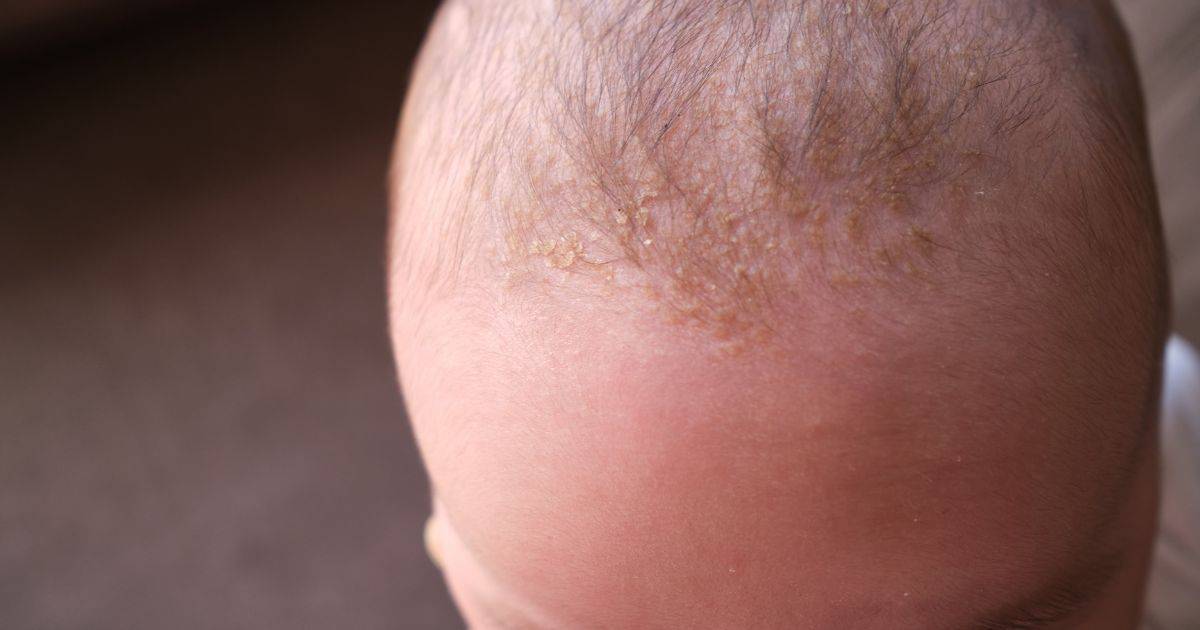
Cradle cap, also known as infantile seborrheic dermatitis, is a common and harmless skin condition that affects many babies, particularly within their first few months of life. It often appears as thick, yellow scales or crusts on baby’s scalp but can also spread to other parts of the body, such as the eyebrows, baby’s face, diaper area, and sometimes their diaper area.
The exact cause of cradle cap isn’t fully understood, but it’s believed that hormones passed from mother to baby during pregnancy may stimulate the baby’s oil glands. This causes an overproduction of oil by the sebaceous glands causing dead skin cells to stick together instead of naturally shedding, leading to the formation of scaly patches or cradle cap scales.
While cradle cap can appear uncomfortable, and look rather alarming, it usually doesn’t bother babies. In fact, my little one didn’t seem bothered by it at all. It’s supposedly not itchy or painful for baby. Over time, cradle cap should clear up on its own.
However, there are ways to help speed up the process and keep your baby’s scalp looking smooth and healthy, which is what I chose to do as soon as I realized what those little dry patches were.
Best Remedies to Get Rid of Cradle Cap in Babies & Toddlers
Gentle Scalp Massage
One of the best ways to help get rid of cradle cap is to gently massage your baby’s scalp each day using a soft brush like the DermaFrida Flakefixer. Using your fingertips or a soft baby brush, apply light pressure in circular motions on your baby’s scalp. This helps to loosen the flaky skin and improve circulation, which can support the skin’s natural healing process. I used this brush with a combination of oil and shampoo, which we’ll get into more below.
The Flakefixer makes the process so much easier because it has a soft sponge, soft brush, and a comb allowing you to follow a simple 3-step process to get those flakes off. This is the product I used because Fridamom Products have always been reliable for me, even through postpartum, so I trusted their DermaFrida Flakefixer and within a matter of days, my little guy’s scalp was back to normal.

Olive Oil or Coconut Oil
Natural oils like olive oil or coconut oil are another popular remedy for softening the scales on your baby’s scalp and keeping the area moisturized. You’ll want to avoid peanut oil in the event of allergies. However, the idea is to moisturize the dry areas on the scalp while loosening up some of those dry flakes.
You could also use a cradle cap gel instead of the oil, such as Tubby Todd’s Bye-Bye Cradle Cap, which is gently formulated to help fight, improve symptoms of cradle cap. This is actually what we used because I was worried about the oil irritating my little guys skin, however, both methods can work great.
If you use oil, you can apply a small amount of oil to the affected areas and let it sit for about 10-15 minutes. This allows the scales to soften, making them easier to gently brush away with a soft-bristled brush like the DermaFrida.
Afterward, wash your baby’s scalp with a gentle shampoo to help remove any excess oil. Be cautious not to use too much oil, which could clog the baby’s hair follicles.
Baby Shampoo
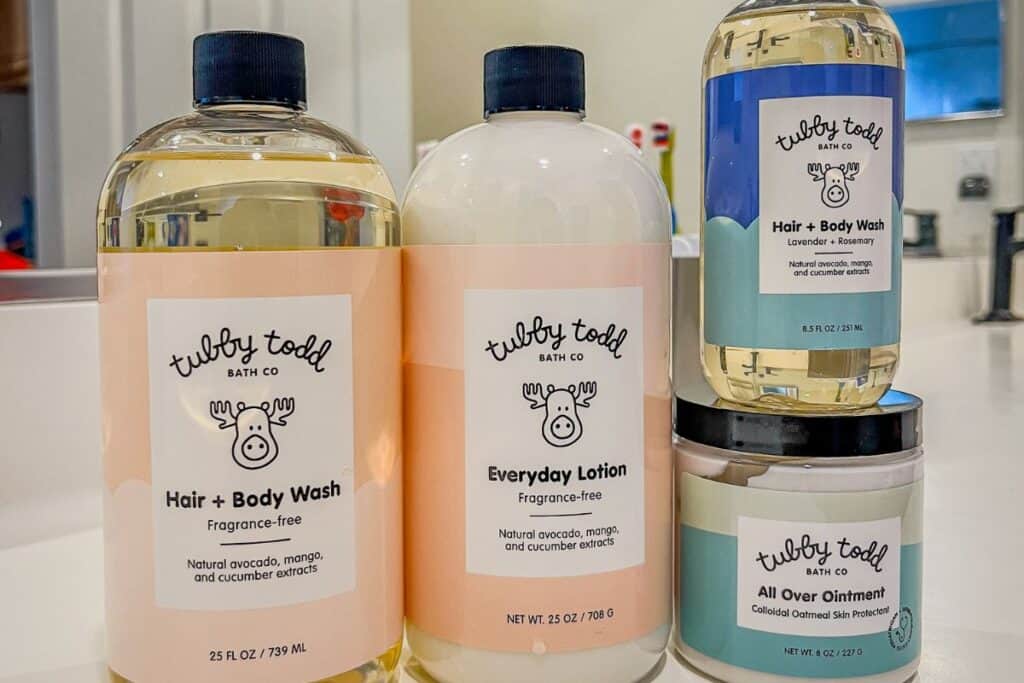
Regularly washing your baby’s scalp with a gentle, mild baby shampoo can help prevent the buildup of oil and old skin cells in turn preventing cradle cap. We’re big fans of Tubby Todd products because they’re so gently formulated and has never irritated my little’s sensitive skin.
We had a few issues with my little one’s skin being irritated after baths until we switched to Tubby Todd products, so I didn’t need much convincing they were well worth the purchase.
Just ensure you’re always opting for a mild and moisturizing shampoo/wash for your baby’s delicate skin. If you can avoid fragrances, even better!
Medicated Shampoos
For more stubborn cases of cradle cap, your baby’s doctor may recommend an over-the-counter medicated shampoo containing ingredients like low % hydrocortisone or ketoconazole.
These shampoos help reduce the amount of oil on the scalp and can help lifting away the cradle cap scales. However, be sure you’re always following your pediatrician’s instructions to prevent any allergic reactions or any other side effects from misusing a medicated product.
Breast Milk
If you’re breastfeeding, some moms swear by applying a small amount of breast milk to your baby’s scalp can help get rid of that scaly rash and cradle cap all together. It’s true that breast milk has natural moisturizing and anti-inflammatory properties that can soothe the skin, thus it could help reduce the appearance of flaky skin or scaly patches.
Baking Soda Paste
According to the American Academy of Pediatrics, you can replace the oil with a simple paste made from baking soda and water to be used as a cradle cap treatment. Apply the paste to the affected areas, let it sit for a few minutes, and then gently rinse it off. Baking soda helps exfoliate the skin and can assist in removing the scales without irritating the skin.
Personally, I didn’t want to go this route because baking soda can be a little too harsh so the idea of using it on young babies just worried me a bit, but I know many other moms who have used this method and had success. My best advice would be to discuss it with your child’s doctor to be safe and have some peace of mind.
Petroleum Jelly
Another alternative instead of using oil, is petroleum jelly. Start by applying a small amount of petroleum jelly to your little one’s scalp before bath time to help soften the cradle cap scales.
Afterward, give a light scrub with your baby brush and wash your baby’s hair with a mild shampoo to help remove the scales.
How to Prevent Cradle Cap from Coming Back
Once you’ve successfully treated your baby’s cradle cap, it’s such a breath of fresh air because their scalp will look normal and you as a parent can ease your worries. Now, it’s natural to want to prevent it from returning, so here are some tips to help keep your baby’s scalp healthy and minimize the chances of cradle cap reappearing.
- Maintain a Regular Scalp Care Routine
- Regularly washing your baby’s scalp with a gentle baby shampoo can help keep oil production in check and prevent the buildup of dead skin cells. Be sure to use a gentle, moisturizing shampoo that won’t dry out your baby’s skin. Regular shampooing for babies is around 2-3 times a week. That should be enough to maintain a healthy scalp without over-stripping natural oils.
- Regularly washing your baby’s scalp with a gentle baby shampoo can help keep oil production in check and prevent the buildup of dead skin cells. Be sure to use a gentle, moisturizing shampoo that won’t dry out your baby’s skin. Regular shampooing for babies is around 2-3 times a week. That should be enough to maintain a healthy scalp without over-stripping natural oils.
- Brush Your Baby’s Hair Daily
- Brushing your baby’s hair daily with a soft-bristled brush can help remove any loose skin cells before they have a chance to accumulate and form scales. This gentle routine can also improve circulation to the scalp, which supports overall skin health. This is especially important during the early months of life when the baby’s scalp is more sensitive.
- Brushing your baby’s hair daily with a soft-bristled brush can help remove any loose skin cells before they have a chance to accumulate and form scales. This gentle routine can also improve circulation to the scalp, which supports overall skin health. This is especially important during the early months of life when the baby’s scalp is more sensitive.
- Moisturize the Scalp
- Keeping your baby’s scalp moisturized can help prevent dry skin that may contribute to the formation of cradle cap.
- After washing, you can apply a light, natural oil (like coconut oil) or a gentle baby lotion to the scalp to keep it soft and hydrated if your pediatrician thinks it’s warranted. Be sure to avoid using products that are too heavy or greasy, as they can cause your baby’s oil glands to become clogged.
- Monitor Your Baby’s Skin for Early Signs
- Keeping an eye on your baby’s scalp for early signs of cradle cap or dry skin can help you address potential issues before they develop into full-blown cradle cap. That’s basically what happened to us, we noticed the dry skin and flakiness and were able to use some of the remedies above to prevent a full cradle cap outbreak.
- If you notice any areas that seem prone to dryness, let your pediatrician know and take extra care to moisturize and gently cleanse those spots.
Cradle cap is a common and harmless skin condition that many babies experience, but with a little care and the right remedies, you can help your baby’s skin stay soft, healthy, and free of those pesky flakes, just like mine. After our first run-in with those early cradle cap signs, they never returned, thank goodness.
Remember, while cradle cap can be frustrating to deal with, it’s usually harmless and will likely clear up on its own over time. Plus, with all the tips and remedies in this article, you’ll have no issues tackling cradle cap and helping your baby’s skin feel smooth, moisturized, and cradle cap free.
More articles you’ll find helpful or interesting:
