
5 Signs Your Toddler Is Ready To STOP Napping
This post may contain affiliate links that I may receive a commission from if you click & buy. In addition, the information on this site is NOT intended to be medical advice. See my full policy for more information.
Wondering if it’s time to drop the nap? I know, you’ve been clinging onto it for dear life. I mean, we all need a litte break throughout the day. The good news is that there are a few common signs your toddler is ready to stop napping. It’s just that knowing for sure can feel confusing. especially when some days your little one seems wired at nap time, and other days they crash mid-afternoon.
As toddlers grow, their sleep needs shift, and what once was a necessary daytime nap might start interfering with bedtime, or even nighttime sleep altogether. And I remember those days all too well.
While some children stop napping as early as age 2, others may still need that one nap a day until they’re 4 or even 5 years old. So, how do you know when to drop the nap and when your child still genuinely needs that extra rest?
In this post, we’ll walk through the top five signs your toddler is ready to stop napping, share expert insights, and give you gentle guidance on how to transition from nap time to quiet time with confidence.
This post may contain affiliate links from which I receive a commission if you click or make a purchase. This article is for informational and educational purposes only and is not intended to replace medical advice, diagnosis, or treatment. See my full policy for more information.
5 Common Signs Your Toddler Is Ready To Stop Napping
First Up: They Consistently Have Trouble Falling Asleep at Nap Time
One of the earliest signs your toddler is ready to stop napping is when nap time becomes a regular struggle. If your little one is lying in bed for an hour with no sign of falling asleep, or if they seem completely wired the moment you start the nap routine, it could be that they’re just not sleepy enough to need it anymore.
I experienced this firsthand with my youngest. He fought nap time endlessly—but then he’d fall asleep right before dinner or melt down from being overtired. It was exhausting. And confusing for all of us.
Because even though he had trouble falling asleep, I could see he wasn’t truly ready to drop that nap just yet. This stage can feel like such a gray area, especially if you’re trying to preserve a little midday break for yourself (because let’s be honest—nap time can feel like gold when you’re a stay-at-home or working-from-home mom).
Naps Are Interfering With Nighttime Sleep
Another common clue? When daytime sleep starts cutting into your child’s nighttime sleep. If your toddler still takes a solid nap but suddenly starts staying up until 10 p.m., wakes frequently during the night, or is wide-eyed at 5 a.m., it might mean that their sleep needs are shifting.
According to the Sleep Foundation and Many Pediatric Sleep Consultants, toddlers need between 11–14 total hours of sleep in a 24-hour period. So when they get too much sleep during the day, it can push out their natural sleep drive at night.
If you notice that skipping a nap helps them sleep longer and more soundly at night, it may be a sign they no longer need naps daily.
Your Toddler Is Happy and Regulated Without Their Nap
When kids stop napping, how they behave throughout the rest of the day becomes really important. If your toddler skips a nap and still seems happy, playful, and emotionally regulated (especially between 3–6 p.m.—the “witching hour” for many families), that’s a strong sign they might be ready.
With my son, I knew we weren’t quite there when he’d skip his nap but have a complete meltdown by 4:00. When children need naps, it really shows in their moods and behaviors.
But once your child can stay awake through the day without becoming overtired or falling asleep randomly before bedtime, it might be time to start transitioning from naps to a more flexible rhythm, like quiet time.
Early Morning Wakings Are Becoming Too Routine
One of the sneakier signs your toddler is ready to stop napping is when they start waking up way too early in the morning. We’re talking 4:30 or 5 a.m.—bright-eyed and ready for the day (while you’re still dreaming about that second cup of coffee). These early morning wakings often point to a sleep schedule imbalance, especially if your toddler is still napping during the day.
When a child’s daytime sleep pushes them to sleep less at night, their internal clock can get thrown off. Pediatric sleep experts explain that as children stop napping, their sleep becomes more consolidated at night, but if they continue to nap when their body no longer needs it, it can lead to frustrating early wakeups and disrupted bedtime routines.
This was something I personally experienced, too. My son would skip his nap, fall asleep super early, and then wake up before the sun. It took some trial and error to realize that adjusting his nap (or replacing it with quiet time) was key to helping him sleep longer through the night. If you’re in the same boat, know this phase is common—and it’s absolutely okay to take it slow as your toddler adjusts.
They’re in the Typical Age Range to Stop Napping
You might be wondering, what age do toddlers stop napping? or when do kids drop their nap? While every child is different, most toddlers stop napping between 3 and 5 years old (according to our expert friends over at Huckleberry Care).
Some babies stop taking naps as early as age 2, but that’s less common. More often, you’ll notice signs starting around 3 when your toddler begins dropping from two naps to one nap, and then eventually none.
Now, let me also say that some kiddos may never want to move on from their nap. I say this as a mom with a 6.5-year-old who LOVES taking his midday nap. Although they’re only about 30-45 minutes long, this guy straight up asks me if he can go to his room and take a nap most days. So just be mindful that the whole napping situation looks different for everyone.
If your toddler is in that age window and you’re noticing they’re resisting naps, sleeping better at night, and thriving without the extra rest, you’re probably seeing a developmental shift. Still, don’t be afraid to go slowly. Just because a few days go well without a nap doesn’t mean it’s gone for good. Some children benefit from alternating nap days or embracing shorter rest periods before fully letting go of that last nap.
How to Slowly Drop Your Child’s Nap
If you feel like you know it’s time to drop your child’s nap, there are 2 key ways to make the transition smooth. As a parent who’s navigated this transition, slow and steady always wins the race.
1) Slowly Reduce Your Child’s Naptime
With my youngest son, he would constantly resist nap time, and then fall asleep at the very tail end and try to sleep for such a long time. Then, he’d struggle to fall asleep at bedtime, and it was quickly becoming a nightmare.
The solution? Cut back his nap time by 15-30 minutes at a time every 1 to 2 weeks. Eventually, he began napping for ~30 minutes. His nighttime sleep resumed back to normal, and then we introduced a little something called quiet time.
2) How to Transition from Nap Time to Quiet Time
So, your toddler is showing some (or all) of the signs they’re ready to stop napping, but now what? If the idea of giving up your midday break sends you into a small panic (been there, girl!), let me just say: quiet time will be your new best friend.
When toddlers stop napping, it doesn’t mean they no longer need a rest, TRUST ME. Their growing bodies and brains still benefit from downtime in the middle of the day. In fact, many pediatric sleep consultants and occupational therapists recommend replacing that afternoon nap with quiet, independent play in a calm environment to help children reset and regulate.
So, here are a few ways to make the transition from nap time, to quiet time a smooth one:
- Start slow. Instead of cutting the nap cold turkey, shorten it by 15–30 minutes at a time, gradually easing into quiet time. This gives your child’s body time to adjust to less daytime sleep.
- Create a “quiet time” basket or bin. Fill it with books, puzzles, building blocks, quiet toys, coloring pages, or reusable sticker pads. I like to rotate 1-2 of the items weekly to keep it fun and entertaining. Here’s a full list of my favorite quiet time activities for my kids.
- Set a timer. I find using a visual timer (like a sand timer or a countdown timer) to be incredibly helpful so that the kid’s know how long quiet time will last. Start with 15–20 minutes and work your way up to 45–60 minutes. You’d be surprised how much you can get done in 60 minutes without interruptions!
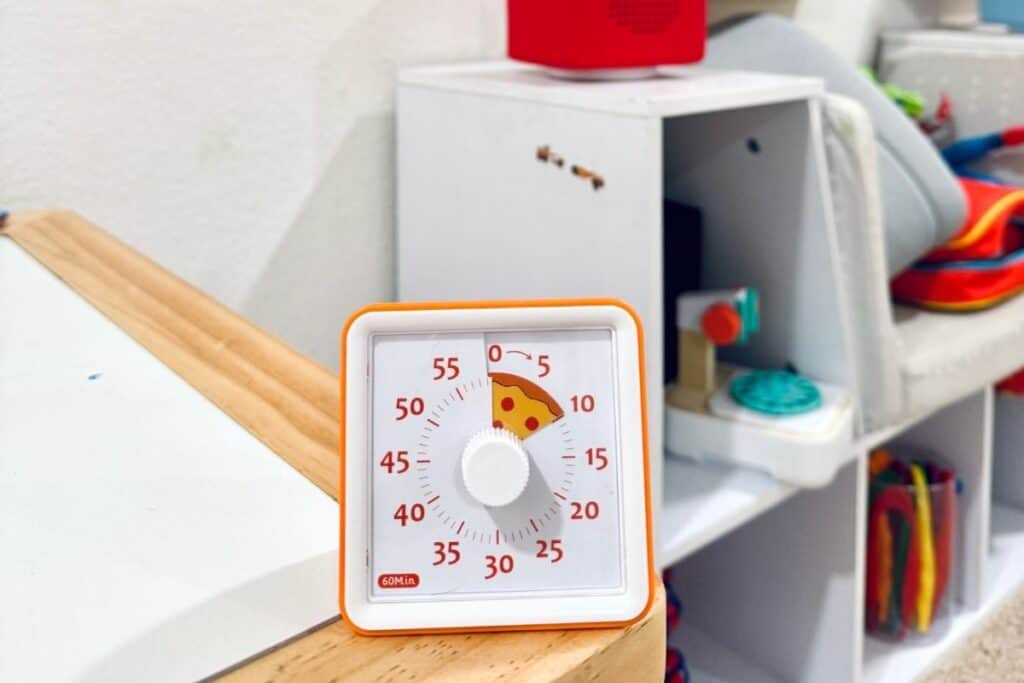
- Keep the environment calm. Dim lights, use white noise, and create some cozy spots (pillows, a soft mat, squishmallows, or their bed) to help signal that this is still a time for their little bodies to rest, even if they’re not actually falling asleep.
- Stay consistent. Young kids, especially toddlers, thrive on routine. Try to keep quiet time around the same time each day, just like you did with naps. This consistency helps their body get that midday reset, even without actually going to sleep.
Remember, quiet time won’t always be perfect (especially at first), but it can be life-changing for your child and for you. Whether you need to answer emails, clean up lunch, or just sit down in peace for 10 minutes, this small shift can protect your sanity while still meeting your child’s sleep and rest needs.
I know from personal experience, quiet time has become a staple part of our day whenever we’re not out and about.

Final Thoughts: Every Child Drops Their Nap in Their Own Time
Navigating the transition from naps to no naps is a huge milestone. Not just for your toddler, but for you, too. It’s okay if it feels frustrating, emotional, or even a little sad (especially if nap time was your only quiet moment of the day).
Just remember: there’s no one-size-fits-all timeline. Some kids stop napping earlier, some later, and some go through a long phase of resisting naps before they’re truly ready. It’s all just part of the process of raising kids.
If you’re noticing the signs your little one is ready to stop napping, take it one day at a time. Pay attention to how your child behaves with and without their nap, support their changing sleep needs, and don’t be afraid to lean into quiet time as your new midday rhythm.
And mama, whether you’re juggling toddlers, working from home, or simply trying to make it to bedtime without losing your cool, you’re doing an amazing job. This phase won’t last forever, and you’ll both find your new groove soon.