15 Tips for Moving a Toddler into a New Bedroom
This post may contain affiliate links that I may receive a commission from if you click & buy. In addition, the information on this site is NOT intended to be medical advice. See my full policy for more information.
Moving a toddler into a new bedroom is a big transition for young children, and it’s not uncommon for parents to feel a little bit overwhelmed about how to make the process smooth. Whether you’re preparing for a new baby, relocating to a new home, or simply upgrading to a big kid bed, this change can be a big deal for your little one. The process may seem daunting at first, but with the right preparation and approach, it can turn into an exciting milestone for your little one and a smooth adjustment for the whole family. I know, because I was once in your shoes while preparing to welcome our second baby. So, here’s what you need to know to make the move a successful transition for you (parents), and the kiddos involved.
Moving Toddler to New Room — Common Reasons
There are several reasons you may decide it’s the right time to transition your toddler to a new bedroom:
1. Welcoming a New Baby: If you’re expecting a new sibling to your toddler, moving your toddler to their own room or to a big kid room can free up space for a second crib. This also helps establish a sense of independence for your toddler while giving the new baby their own safe sleep environment. This was also the biggest reason we ended up moving our son, when he was a young toddler, into his own room.
2. Moving to a New Home: Relocating often means creating new surroundings for your child, including a safe sleep environment in a new place. The move might feel scary and uncertain, but can act as an opportunity to introduce your toddler to a fresh and exciting big kid room, you can make it a fun experience for all of you!
3. Encouraging Independence: Transitioning your toddler to their own bed (or big girl bed/big boy bed) can be a good idea as they grow older and more independent. If they’re used to sleeping in your room, it’ll give them the space to take pride in their own sleeping area while freeing up your space to be your own again.
4. Creating a Guest Room: If your toddler’s current room is needed for other purposes, like maybe a guest room, they may need to move to a spare room or smaller room. This can also be a great time to upgrade their sleeping arrangements to a big bed so they feel like they’re getting a little bit of a ‘promotion’ rather than they’re getting lugged around from room to room.
Whatever the reason, keep in mind that this big change is a major milestone for your toddler, and approaching it with intention and lots of patience will make all the difference!

15 Tips for Moving a Toddler into a New Bedroom
Talk About the Change Early: Start the conversation a few weeks to even a month or two ahead of the transition to start preparing your toddler mentally and emotionally. Use simple, positive language to explain the next step. For example, you can say, “You’re getting your own big kid room, how does that make you feel?”
Giving them time to express and process the idea helps reduce anxiety and builds anticipation. Continue to check in with them about how they’re feeling: what are they excited about? What part makes them feel uncertain? And keep leaning into these types of questions to help you make this transition a smooth one.
Let Them Be Part of the Process: Involve your toddler in decorating their big kid room — from selecting their own bed to some small artwork for the walls. Let them pick out new sheets, a fun night light, or small decor items to make the space feel special. When children are involved in creating their space, they’re more likely to feel ownership and excitement about their new surroundings.
This is what we did with our son. I saved some of my favorite toddler beds on an Amazon list and let him pick his favorite one. I also had saved some toddler bedroom decor and he got to choose some of those, between the talking, his help in planning, and reading lots of books, we had a smooth transition.
Choose the Right Time: Timing is everything when it comes to this transition. Try to avoid making the switch during other big life changes like potty training or the arrival of a little brother or little sister. Instead, plan to make the switch before these events occur. When your child’s life feels stable and predictable, they’ll be more prepared to tackle this big transition with minimal setbacks.
Keep Their Routine Consistent: A consistent bedtime routine provides security and helps ease the transition because the only thing that should be changing, is the room they’re sleeping in. Stick to familiar activities like reading, a bath, and cuddles before bed. Even in the new place, maintaining these rituals creates a sense of normalcy that can help your toddler feel at ease in their new room or new bed.
Start with Naps: If your toddler is having a hard time with the new room transition, start more slow. Let them take their afternoon nap in the new room first to get used to it gradually. This gives them a chance to acclimate during the day when the transition feels less daunting.
Read Books About the Move: Find books that talk about moving to a big kid bed or toddler room. Stories can help normalize the experience and make it exciting. Look for relatable characters going through similar changes to help your toddler understand they’re not alone in this journey. Here are some of my favorite books about this topic:
Set Up a Safe Sleep Environment: Ensure the new surroundings meet safe sleep guidelines from the American Academy of Pediatrics. Use a guard rail for a twin bed or a convertible crib if they’re not ready for a single bed yet.
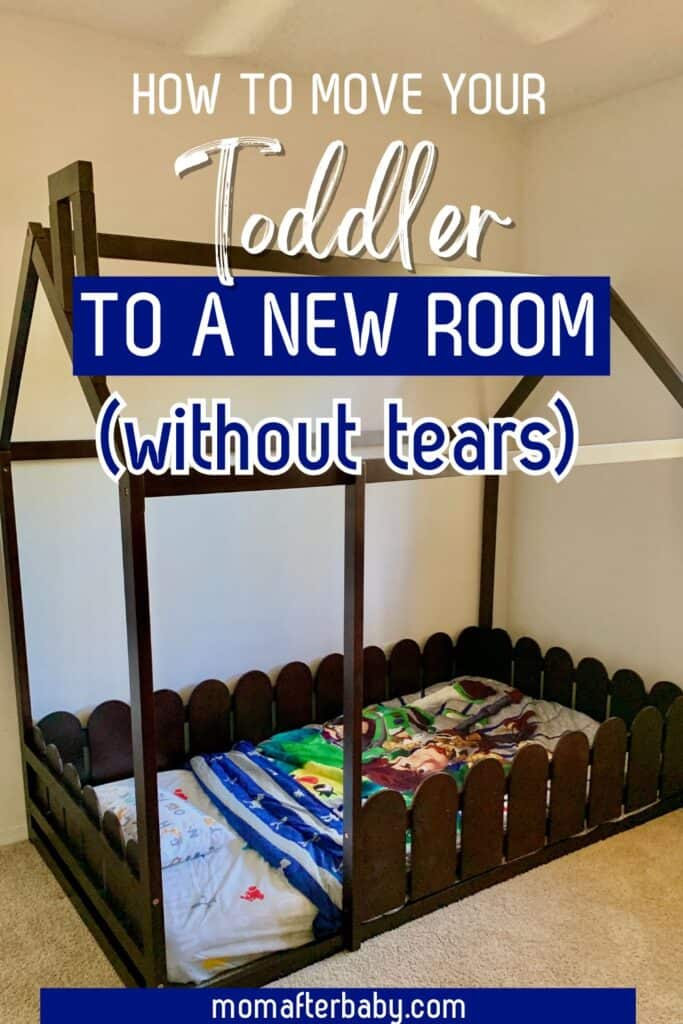
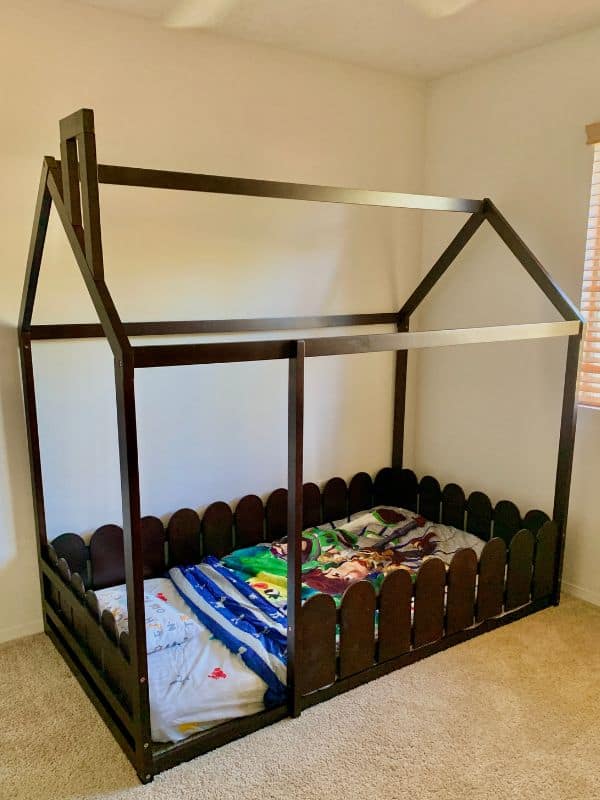
Personally, we opted for a floor bed (see the one below) because my boys are notorious for waking at night and I was worried they’d fall out of a higher-up bed. Safety is key to ensuring peace of mind for both you and your child.
Here are a few other benefits to using a floor bed (vs a traditional bed) for toddlers:
- Helps your child feel more safe and secure
- It gives them more independence
- Safer for children who move a lot
- Can sometimes be more affordable (depending on the design)
- Encourages natural movement that supports their gross motor development
Introduce Familiar Comforts: Let your child bring their favorite stuffed animal, blanket, or sleep sack to the new bedroom to create a sense of familiarity. These comforting items can help bridge the gap between the old room and the new room. Trust me, it’s a bad idea to move your child into a new room without their favorite comfort toy.
Add White Noise Machine: White noise can help block out unfamiliar sounds and make the first night and general night wakings less disruptive. You can also use a sound machine like the Hatch, in your kid’s new room and use it to set “wake up” and “bedtime” colors. This way if your child wakes and sees a specific color, they’ll know whether it’s time to get out of bed or wait for their light to turn on.
Celebrate the Big Change: We mentioned this earlier, but try to treat the move to a new room like a celebration. If you think it’s exciting, they might also begin to feel that excitement. Use phrases like, “You’re moving to your big girl room! This is such a great time for you.” Celebrating the transition reinforces a positive outlook and builds their confidence.
Address Middle of the Night Wake-Ups: If your toddler wakes up in the middle of the night, reassure them that they’re safe and gently guide them back to their own toddler bed or big bed. Of course, there will be those inevitable nights they end up in your bed, and that’s ok too.
Stay calm and consistent to help them adjust to their new surroundings without added stress. If you need additional help, try Huckleberry. It’s an expert-founded app to help parents support their child’s sleep through sleep research and more!
Avoid Overwhelming Newness: Moving to a new room might feel scary for your child. They’re little and it is what it is, so, with that in mind, plan to keep some elements of their old room in the new place so the change isn’t too abrupt. Familiar furniture or toys can ease the transition and provide a comforting sense of continuity.
Practice Spending Time in the Room: Before the first night, let your toddler play or read in their new room during the day to help them feel comfortable. This concept is similar to letting them take their naps in the room before moving on to bedtime sleep. Spending fun and positive time in the space when it’s not bedtime can reduce any fears or resistance they might feel.
Keep Safety in Mind: While this will be a room your toddler will be spending lots of time in, be sure to run through a final safety checklist before moving them in. For instance, check the bedroom door to ensure it opens and closes correctly, remove any choking hazards, and cover up any electrical outlets.
You can also make sure the crib mattress or bed is at the right place or level for their age and size. A safe sleep environment is non-negotiable for peace of mind and successful transitions.
Be Patient: This is a key reminder to always remember during any transitional period, every child adjusts at their own pace. It may take a little bit of time for your toddler to embrace their big kid bed and new surroundings fully, and that’s ok. Offer plenty of encouragement and stay consistent—patience, love, and consistency will be the key to a successful transition for you and your kiddo.
Key Takeaways of Moving Your Toddler into a New Bedroom
Transitioning your toddler to their own room is a major change, no matter what the reasoning, but with the right strategies, it can be a smooth transition for the whole family. By involving your child, maintaining their routines, and providing a sense of security, you’ll set them up for a successful transition into their super awesome big kid room.
While it may take a few nights—or even a few weeks—for your toddler to feel fully comfortable, your support and preparation will make all the difference. Good luck as you embark on this exciting new chapter for your family! Have additional tips for us to add? Leave them in a comment underneath the article!
More articles you’ll find helpful or interesting: