
The Power of a Morning Routine For Kids, 15 Tips!
This post may contain affiliate links that I may receive a commission from if you click & buy. In addition, the information on this site is NOT intended to be medical advice. See my full policy for more information.

As a mom of two little ones, I can relate SO HARD to those chaotic mornings. The ones where you’re begging your kids to get their shoes on and get into the car, but everyone is acting like a deer in the headlights. That’s where the power of a morning routine for kids comes into play.
We have heard it many, many times before. “Kids thrive on routine”.
So then, why does it feel so hard to implement?
If building a solid morning routine for your kids has been on your to-do list, but you’ve been feeling a little overwhelmed by the idea, the tips in this article are going to help you build a routine and hop on a train to better mornings.
However, remember, nothing is perfect. The idea of having a routine isn’t to never have a crying child refuse to leave the house. It’s also not to convince your child to eat their bowl of cereal.
Instead, it will build up your child’s confidence as they establish their roles throughout the new routine and make mornings a teamwork effort vs you feeling like you’re just barking orders at everyone.
It took me some time to finally admit the truth I had been avoiding, a solid routine can really make the difference in having more happy mornings. Why I resisted it so long, I’m not sure. I don’t enjoy change too much (hey, a routine could help with that, huh), so maybe that’s why.
After months of playing around with different methods and ways to build a routine for my little ones — I’m happy to share 15 tips that can realistically help your family too!
Benefits of a Morning Routine for Kids
If you’ve ever found yourself repeating “put on your shoes” seventeen times before 8 a.m., you’re not alone. Mornings with kids can feel like a mini-marathon before the day even starts. But here’s the thing — routines help bring structure to that chaos. And that structure? It can help your child feel calmer and more confident.
According to the American Academy of Pediatrics, routines support kids’ emotional regulation and help them develop independence, responsibility, and resilience. When your child knows what to expect, they’re less likely to feel overwhelmed or anxious about transitioning from home to school or daycare. They know the steps, and they know they can do them.
A good morning routine also helps:
- Reduce the power struggles – Helps them learn what to expect and when, making the day more predictable and less scary.
According to an Expert…
“If your children are struggling with transitions and they are resisting your lead, the best thing you can do to gain their cooperation and show them that you’re a team is to use a visual schedule or routine chart to help your child visually process (and predict) what will happen in their day (or a transition, etc).”
– Bryana Kappadakunnel
Licensed marriage and family therapist, infant/early childhood mental health specialist, and perinatal mental health specialist, Author of Parent Yourself First, + Founder of Conscious Mommy
- Boost time management skills – Yes, even toddlers & young children can learn to pace themselves and understand time in the context of their routine.
- Encourage cooperation – Everyone’s working toward the same outcome TOGETHER instead of being ‘told what to do’.
- Strengthen their sense of accomplishment – Completing tasks like brushing teeth or getting dressed independently builds so much confidence.
And let’s be honest — a smoother morning for your child means a smoother morning for you too, who doesn’t want that?
Morning Routine Tools I Love (& They’ll Work Differently for Everyone)
Hatch Rest+ (2nd Gen) — Our Hatch Rest+ has been a staple in our lives since my boys were babies. My oldest is now 7, so to get one product and have it last 7 years is pretty impressive in my book! What was once a soothing sound machine for sleep turned into a helpful tool for bedtime and waking up, thanks to the customized sounds, light colors, and schedule features of the Hatch.
Charmspring Routine Board — We’ve played around with visual printout routine charts, but they’ve never fully stuck. With the Charmspring routine board — not only is the routine simple to use and customize, but it’s pretty large, sturdy, and very clear to understand. The activity tiles are very easy to move around (especially for little hands) thanks to their snap-in/magnetic feature.

Want a custom Charmspring Board for your kids? Use KARISSA20 to save on your purchase.
Kid-Friendly Timer — One of the best ways I help my kids stay on track and also just understand time a bit more is with a timer. Nothing fancy, just a cheap timer from Amazon that my kids can turn and set on their own, and it beeps when time is up.
Days of the Week Printouts — Not only does using days of the week printables help kids start to understand their days of the week, but if your child is 4 or under, it will help them master some early learning skills that’ll only benefit by the time they’re school age. For example, my boys knew their days of the week before starting preschool because we’d practiced it at home. Now that they’re a bit older, they understand that on Monday (for example), we have school and sports practice, but Tuesday-Friday, there’s no sports practice.
Month Printouts — The same concept applies to the months. Keep it simple, use an easy-to-read printable to add to your routine board or hang up on the wall close by. Each morning, practice identifying the month and days of the week.
15 Tips to Implement an Effective Morning Routine for Kids
1. Start the night before
One of the best ways to reduce morning stress is to begin with a good night’s sleep and some simple nighttime prep. Laying out kids’ items, prepping the lunch box, and reviewing a routine checklist can do wonders for both young kids and older children.
Taking 10–15 minutes each night to talk about the next day not only builds predictability of their daily activities, but gives your child a sense of control—a great tool for reducing resistance during school mornings.
Think of it as investing in a calmer start of the day for the whole family. Just be sure it’s a collaborative effort and you don’t get caught up taking on the entire role yourself (I have to remind myself of this every so often as well).
2. Create a simple visual routine chart
Younger children especially thrive on visual cues. A visual morning routine chart with pictures of the tasks (like brushing teeth, getting dressed, and eating breakfast) can help make expectations clear.
For older kids, you can create a more advanced routine list or checklist that they can manage independently. Have it include a “to-do” list and a “completed” list, this way they can practice checking off their completed tasks. A great way to build ownership of routine tasks, this method also supports emotional needs by adding structure and reducing surprises in their daily routine.
3. Wake up before your kids (if you can)
This might not be an easy option for everyone—especially with small children or newborns—but even 10 minutes of quiet time before the chaos starts can make all the difference. I’ll be the first to tell you that this method NEVER worked for me because my littles are early risers.
However, if you can spare a few minutes in the morning, be sure to pour your morning coffee, stretch, or just sit in peace. Giving yourself space to breathe before you dive into your child’s needs helps you respond with a positive tone instead of reacting from a stressed-out place.
4. Balance consistency and flexibility
A consistent morning routine is the foundation, but don’t forget that kids are human, too. Some school mornings will be smooth, while others will feel like a scramble. Having a general structure gives your child a sense of security, but being willing to pivot when needed shows them that it’s okay when things don’t go perfectly.
That balance is an essential time management skill—and modeling it as a positive example is something they’ll carry into adulthood. For context, I wish I had this skill modeled to me as a child. What about you?
5. Make wake-up time pleasant
Instead of flipping on bright lights and immediately rushing them through what needs to get done, try easing your child into the day with a gentle alarm clock, soft music, or even cuddles for young children. I get it, some days are more rushed than others.
But a soft start helps regulate emotional responses and sets a positive tone for the entire day — for BOTH OF YOU. Even older kids appreciate a moment of connection before diving into their responsibilities.
I love using the Hatch Rest to help my kids wake up in the morning. They hear the birds chirping and see that their “wake up” light is green, which means it’s time to get up and get dressed. This alone kicks off our morning in a soft but productive way!
6. Break tasks into bite-sized steps
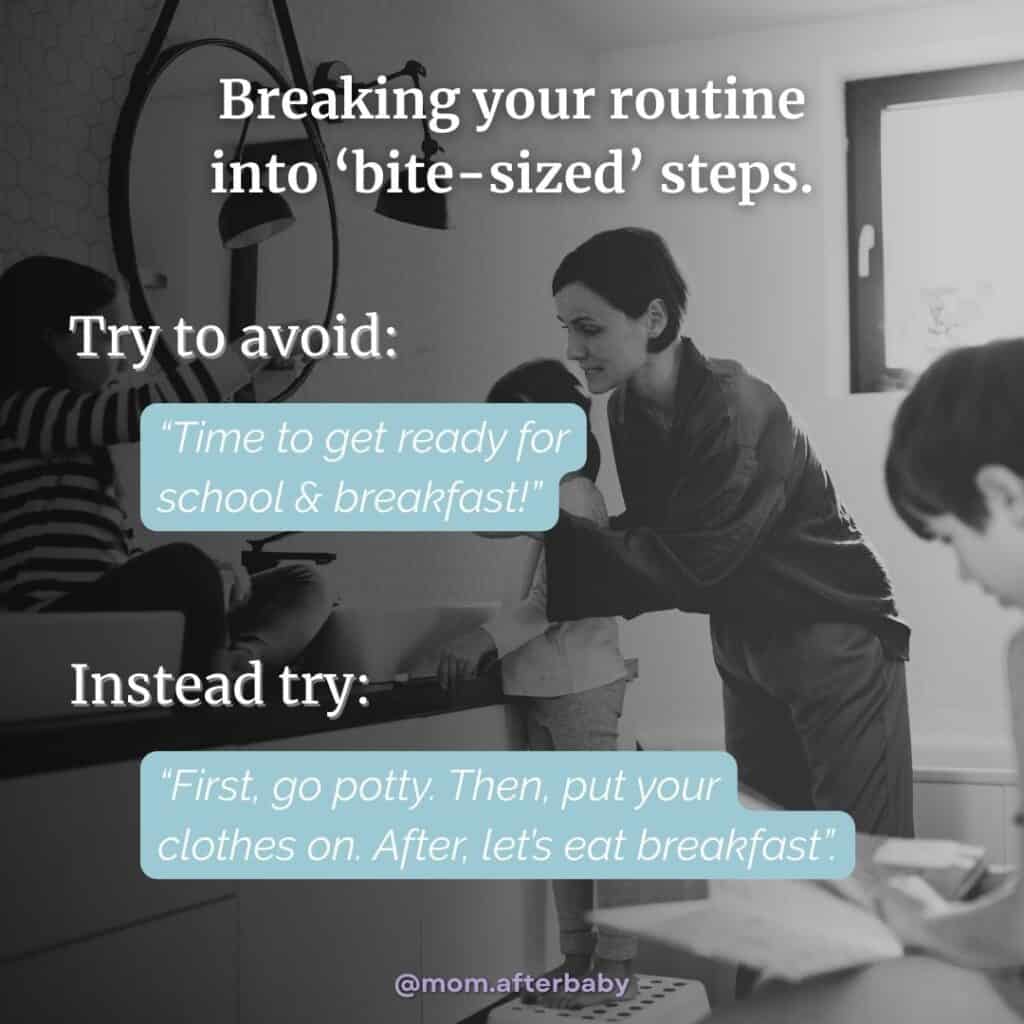
Telling a second grader to “get ready for school” might sound simple, but to them, it can feel like a giant task. Instead, use simple steps like: “First thing—go potty, then brush your teeth, then come back for your clothes.”
These bite-sized directions help your child stay on track and reduce that deer-in-the-headlights feeling we all know too well. This is also why visual reminders can be so helpful — it helps break down the task into a single visual reminder.
7. Give age-appropriate responsibilities
Whether your child is a toddler learning to put socks on or an older child packing their own lunchbox, giving them ownership of small tasks fosters independence and boosts confidence. Letting your child pour their breakfast or pick their outfit from 2 options gives them autonomy without overwhelming them. It’s a simple way to encourage good behavior and essential life skills.
One way I’ve easily incorporated this is by giving my kids some options for breakfast in the morning. I usually say something like, “We’ve got pancakes or cereal on the menu today, which do you prefer?”.
8. Use timers or songs to pace transitions
Transitions can be hard, especially for younger kids or neurodivergent kiddos. Using an age-appropriate timer or a silly song can make it fun: “Let’s beat the song and get dressed before it ends!” or, like one of our favorite Danny Go Videos, you can complete your task along with the song! This approach can also help your child playfully manage time, build those essential time management skills, and keep everyone moving through the routine without nagging or shouting demands.
9. Give your kids extra time
Young children move slowly—it’s simply part of their development. Rushing them through their daily routine often backfires and leads to meltdowns. I mean, tell me of a time you rushed your little one through a task without giving them enough time, where it actually ended well?
Instead, build in ample time for those slower moments. Give your child extra time to find their favorite shoes, finish brushing their hair, or pack their backpack. It’s a good idea to assume everything takes longer than you expect and build your new schedule around that.
10. Model the routine yourself
Want your kids to follow the routine? Show them what it looks like. When you brush your teeth, make your bed, and prep your morning coffee around the same time every day, you’re setting a positive example of your routine. This shows your kids that routines aren’t just for them—they’re for the whole family.
11. Prep breakfast ahead of time
The most important meal of the day can also be the most rushed. Think about it, you wake up early, you’re exhausted, the kids aren’t listening, and before you know it — it’s time to head out the door for school.
Instead of that madness, try prepping healthy breakfasts like overnight oats, breakfast burritos, or mini pancake muffins ahead of time. You’ll save time and avoid the stress of deciding what to feed everyone during the morning rush. If your child is old enough to grab their own breakfast, that’s an added benefit in helping them build independence, too.
12. Keep your routine short and sweet
This one will be key, especially if you’re raising younger children. Don’t feel pressured to create a long or complicated new morning routine. A few simple things to focus on consistently will go a long way.
Focus on the essential tasks like brushing teeth, getting dressed, and eating breakfast. Then, if there’s extra attention or quality time, think of it as a bonus, not a requirement.
13. Stay calm when things go sideways
Let’s be honest—no realistic morning routine is going to go perfectly every single day. There will be toothpaste explosions, last-minute tantrums, and emotional responses that maybe don’t align with your expectations. When that happens, try to stay calm.
Take a minute or two to ground yourself. I know it’s difficult when your kids are having a hard time, thus giving you a hard time, but your energy sets the tone. A peaceful parent presence can often defuse a meltdown faster than anything else.
14. Celebrate small wins
When your child completes the morning checklist, that totally deserves some positive reinforcement! High-fives, hugs, or even little prizes (like a sticker chart) go a long way—especially for younger kids. It builds motivation and shows them their efforts are noticed and appreciated. However, if using a sticker chart, be mindful not to rely on them so much that your child expects a prize after every routine or to-do list task they complete.
My son always loves it when we exchange a round of high-fives after he completes some of his tasks. He says, “Ready Mom? Time for a high five”… as he proudly jumps up high to give me a double-five. It’s the sweetest thing and makes me feel so happy to see how proud he is of himself!
15. End on a good note
Even if the morning has rough patches, my number one rule is to always do my best to reconnect before my child heads out the door. A hug, a funny handshake, or simply saying, “You’re going to have a great day, I love you,” helps your child feel safe, loved, and ready to take on their day.
That moment of connection can carry them through the entire day—especially in those early school years when emotions run high and routines are still forming. The last thing I’d ever want is for them to carry the weight of our chaos throughout their day, so always be sure to redirect and end on a good note if things start feeling rocky.
More articles you’ll love reading: