Postpartum Loneliness: 10 Ways to Stay Connected During the Fourth Trimester
This post may contain affiliate links that I may receive a commission from if you click & buy. In addition, the information on this site is NOT intended to be medical advice. See my full policy for more information.
It’s 2 am. The house is dark and dead quiet. And it’s just you and a baby who will not, for anything, go back to sleep.
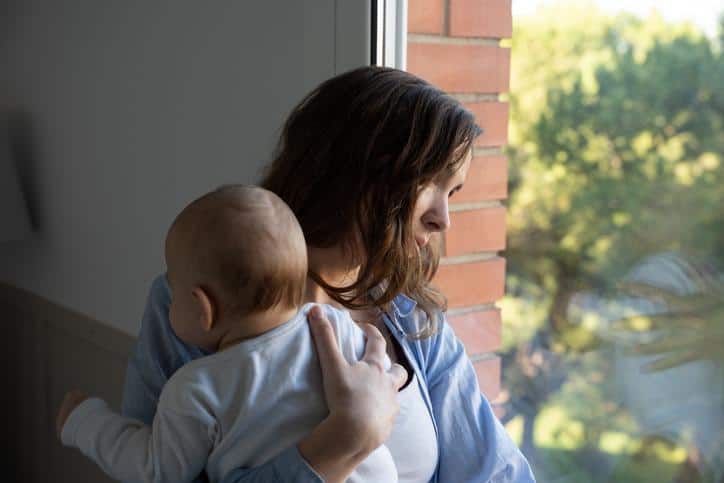
Everyone else in the world is asleep. Your partner. Your friends. Your family. And there you are, exhausted beyond belief, rocking and feeding and shushing in the dark, feeling more alone than you ever thought was possible.
If that’s you right now, mama, I see you. What you’re feeling is postpartum loneliness — and I promise you are not the only one awake at 2 am feeling this way.
When you’re pregnant, life feels busy. Everyone’s fussing over you and texting to check in; you might have a baby shower. You and your partner may also be constantly on the go, preparing for your little one’s arrival.
Then, your baby arrives. Visitors trickle off. Everything becomes a little quieter. It’s just you and this little person day after day. And yes, you love them more than anything, but the loneliness that emerges in that darkness in the middle of the night is real and common. You’re not failing, and you’re not a bad mom for feeling this way.
Coping with postpartum loneliness is something that many people don’t talk about. But feeling lonely during maternity leave happens to almost every single mom. If you’re wondering how to deal with being a lonely new mom, here’s everything I’ve learned throughout the years that helps you stay connected — as well as how to tell the difference between the baby blues and postpartum depression.
Disclaimer: This article may contain commission, paid partnerships, or affiliate links. We independently review everything we recommend. When you buy through our links, we may earn a commission from qualifying purchases.
Why Postpartum Loneliness Is So Common
Here is what nobody warns you about: the fourth trimester is one of the loneliest seasons of modern motherhood — not because something is wrong with you, but because of the enormous gap between how this season is supposed to feel and how it actually feels.
There is this cultural story that says new motherhood is all softness and snuggles and golden-hour light. And yes, there are moments like that. But there is also a lot of being completely alone with a baby, cut off from the identity and social rhythms you had before. Your friendships have changed. Your body is healing. You may not have a strong “village” nearby, or the one you do have doesn’t quite know how to show up right now. Your brain is running on almost no sleep, and your hormones just went through the biggest shift of your life.
Feeling isolated after having a baby is not a personal failing. It’s a predictable outcome of a massive life transition that most of us walk into completely unprepared. Now that you know that, let’s talk about what actually helps.
10 Ways to Cope with Postpartum Loneliness When You’re Exhausted
I know you’re tired, mama, and adding more to your plate is the last thing you need. So, these are small, low-energy postpartum loneliness tips you can do from the couch, most of them with a baby asleep on your chest.

1. Send a five-minute voice memo
When texting feels like too much (and typing one-handed always does), a voice memo is your best friend. You just talk — no punctuation, no pressure — and hit send. It’s the closest thing to a real conversation you can fit into any feeding session. And hearing a friend’s voice memo in return can be exactly what you need to get through a rough afternoon.
2. Set up an “open” video chat with friends
This one’s simple and low effort: simply call a friend and just… leave it running. No agenda, no getting ready, no big catch-up. You fold laundry, she makes dinner, the baby fusses, and you’re simply together for a bit, the way you’d hang out on a lazy Saturday.
3. Prioritize one non-baby conversation a week
I know it’s tough. I know life revolves around your baby right now. But try this once a week.
Attempt to have one conversation that isn’t about the baby at all. Ask a friend about her job drama, the show she’s watching, or her love life — anything that reminds you that you are still in there, a whole person beyond “mom.” This can be an easy, convenient go-to for your mental health during the fourth trimester. Small and simple, it lets you reconnect with yourself and others beyond your baby — even if only for a few seconds.
4. Step outside once each day
I know leaving the house feels like a military operation right now, so let’s lower the bar a bit. You don’t need to go anywhere.
Stand on the porch with your coffee. Walk to the end of the block (or your driveway). Sit in the yard while the baby naps on you. Fresh air and a few minutes of sunlight can help improve your mood. Even a small wave to your neighbor counts as human contact on a hard day. And if you’re starting to feel ready to rebuild some of that social connection, our guide to making friends after having a baby has practical ideas for when you’re there.
5. Find the right online mom group
There are a lot of online mom groups. And it can take sifting through a few to find your people. Some great places to start include your due-date-month group, a feeding-specific group, or a local moms page. And don’t be discouraged if you don’t click with people right away; sometimes it takes a few interactions, even online, to build a connection.
6. Engage in low-stakes community groups
Community groups you join don’t have to revolve around motherhood. You could try joining a hobby group, a faith community, a neighborhood app, or even start up an old group chat.
Fourth trimester support doesn’t always have to come from other moms!
7. Try a virtual postpartum support group
Virtual support groups mean you don’t have to leave your house, and you can attend right from your bed or couch.
Postpartum Support International runs more than 50 free online groups over Zoom, led by trained facilitators, with options for all kinds of moms and every kind of postpartum experience. Check it out, and register for a group or virtual meet-up as you see fit.
8. Journal as a way to reconnect with yourself
Feeling isolated after having a baby is one thing. But many of us also lose ourselves along the way. I remember feeling so disconnected from myself, even just a couple of weeks in. A year after my first, I then struggled to recall who I was before having a baby. When daycare eventually freed up some of my time, I didn’t know how to spend it. My therapist recommended journaling.
All you need to do is dump your thoughts onto the page. Anything and everything. Getting them out can help you reconnect with yourself and also be a way to care for your mental health after childbirth.

9. Tell your partner what you need
While we all wish our partners knew what we were thinking, that isn’t typically how it works. Instead of hoping they’ll notice you’re drowning, try saying it out loud: “I’ve felt really lonely and stuck in the house. Can we figure out how I get an hour out this weekend?” It’s likely they’re more than happy to help; they just need to be in the know.
If your partner has recently gone back to work and you’re finding the hours alone much harder, that shift can really amplify postpartum loneliness. Surviving the first week solo has some honest tips for getting through it.
10. Ask for specific help
Most of our friends and family want to show up for us. But they don’t know how. So it can help to be specific about what you want or need.
For instance, ask a friend or family member to hold the baby while you shower. Or ask for a meal to be brought over. Loved ones are in your corner, but, like your partner, they don’t know what you need unless you explicitly say it.
A Word for Your Partner
If a partner, family member, or friend is reading this alongside the new mom in your life: thank you for being here. The fact that you’re looking already puts you ahead.
The most useful thing you can do right now isn’t a grand gesture — it’s paying attention. Ask her how she’s feeling, not just how the baby is doing. Offer a specific swap, like taking the baby for two hours on Saturday so she can sleep or leave the house alone. And when she tells you she’s lonely or struggling, believe her and show up — even if from the outside, things look fine.
She is doing something enormous. Your presence, your attention, and your willingness to ask “what do you actually need?” matter more than you know.
When Loneliness Becomes More
The baby blues usually start a couple of days after delivery, peak around day five, and ease off on their own within about two weeks. If you’re tearful and tender but still basically able to care for yourself and your baby, it’s most likely baby blues. It happens, and it passes. After all, your hormones just underwent a massive change.
But if these feelings last longer than two weeks, there might be more going on, such as postpartum depression (PPD) or postpartum anxiety (PPA). The Centers for Disease Control and Prevention (CDC) states that about 1 in 8 women develop PPD, meaning feeling isolated after having a baby isn’t always something you should brush off or just push through.
Some red flags that what you might be feeling extends beyond the baby blues include:
- Sadness or emptiness that lasts longer than two weeks
- Constant worry, racing thoughts, or panic
- Losing interest in things you normally enjoy
- Trouble sleeping (even when baby sleeps)
- Feelings of guilt or worthlessness
For a fuller picture of what postpartum mood disorders can look like and how to get support, this overview of postpartum anxiety and mood disorders is a good starting point.
And if you’re ever having scary thoughts about harming yourself or your baby, this is a sign to reach out right now, not later. Tell someone you trust. Call your doctor, OB, or midwife.
You may also want to consider the National Maternal Mental Health Hotline. It’s free, confidential, and available 24/7; call or text 1-833-TLC-MAMA (1-833-852-6262) to talk to a trained counselor. You don’t need to be in crisis to use it, and partners and family can call too.
If you feel you might act on thoughts of harm, call or text 988 (the Suicide & Crisis Lifeline) or 911 right away.
A Gentle Reminder to Your Future Self
Right now, in the thick of it, this season can feel endless. The long days, the longer nights, the loneliness that sneaks in at 2 am — it can feel like this is just how life is now. But I promise you, it isn’t.
The tiny baby who needs you around the clock won’t always need you this way. The walls of your house won’t always feel this close. You will laugh with friends again, have whole conversations again, feel like yourself again. It’s coming, even if you can’t see it right now.
On the days coping with postpartum loneliness feels like too much, be gentle with yourself. You are doing something genuinely hard, and you’re doing it while running on empty. That deserves grace. You don’t have to do the voice memo, the walk, and the support group all in one day. Some days, keeping yourself and your baby fed and safe is the whole win, and that is more than enough.
Just remember: this season is temporary. Feeling lonely doesn’t make you a bad mom. Small steps count. And you’re allowed to ask for help.
You’ve got this, mama. One step at a time.
Frequently Asked Questions
Yes, it’s completely normal. Becoming a mother changes your body, routines, identity, and relationships all at once, often while you’re home recovering on very little sleep. This can leave many new moms feeling isolated, even when surrounded by people who love them. It doesn’t mean you’re doing anything wrong. Nearly every mom experiences some degree of postpartum loneliness during the fourth trimester.
Start small and low-energy. A few things you can do from home: send a voice memo instead of trying to text; leave an “open” video chat running while you both go about your day; step outside once a day, even just onto the porch; find a supportive online mom group for those 3 am moments; join a free virtual postpartum support group from your bed; ask for specific help (“Can you bring dinner Thursday?”); and tell your partner exactly what you need. Pick one and start there. You don’t have to do all of them.
Reach out if your low feelings last longer than two weeks or keep getting worse. The baby blues usually fade on their own within about two weeks. If sadness or anxiety lingers past that point, feels intense, or makes it hard to care for yourself or your baby, it may be postpartum depression or anxiety — both of which affect about 1 in 8 new moms and are very treatable. If you ever have thoughts of harming yourself or your baby, get help right away: call or text the National Maternal Mental Health Hotline at 1-833-TLC-MAMA (1-833-852-6262), or dial 988 in a crisis. Asking for help is a strength, not a weakness.
Baby blues typically begin within two to three days of delivery, peak around day five, and resolve on their own within two weeks. They feel like emotional sensitivity, tearfulness, and mood swings linked directly to the hormonal crash after birth. Postpartum depression is more persistent, lasts beyond two weeks, and can include deeper sadness, loss of interest in things you enjoy, difficulty bonding with your baby, and in serious cases, thoughts of self-harm. If you’re unsure which you’re experiencing, reach out to your doctor or midwife — you don’t have to wait until things feel severe to ask for support.
You don’t need social stamina to stay connected. Voice memos are ideal because you can talk for five minutes without needing an immediate response. “Open” video calls let you be with someone without having to perform for them. Online mom communities — particularly ones organized around your baby’s birth month or feeding journey — let you engage on your own timeline, day or night. When you’re ready to take that next step toward in-person connection, this guide to making mom friends after having a baby offers practical, low-pressure ideas for building your village.